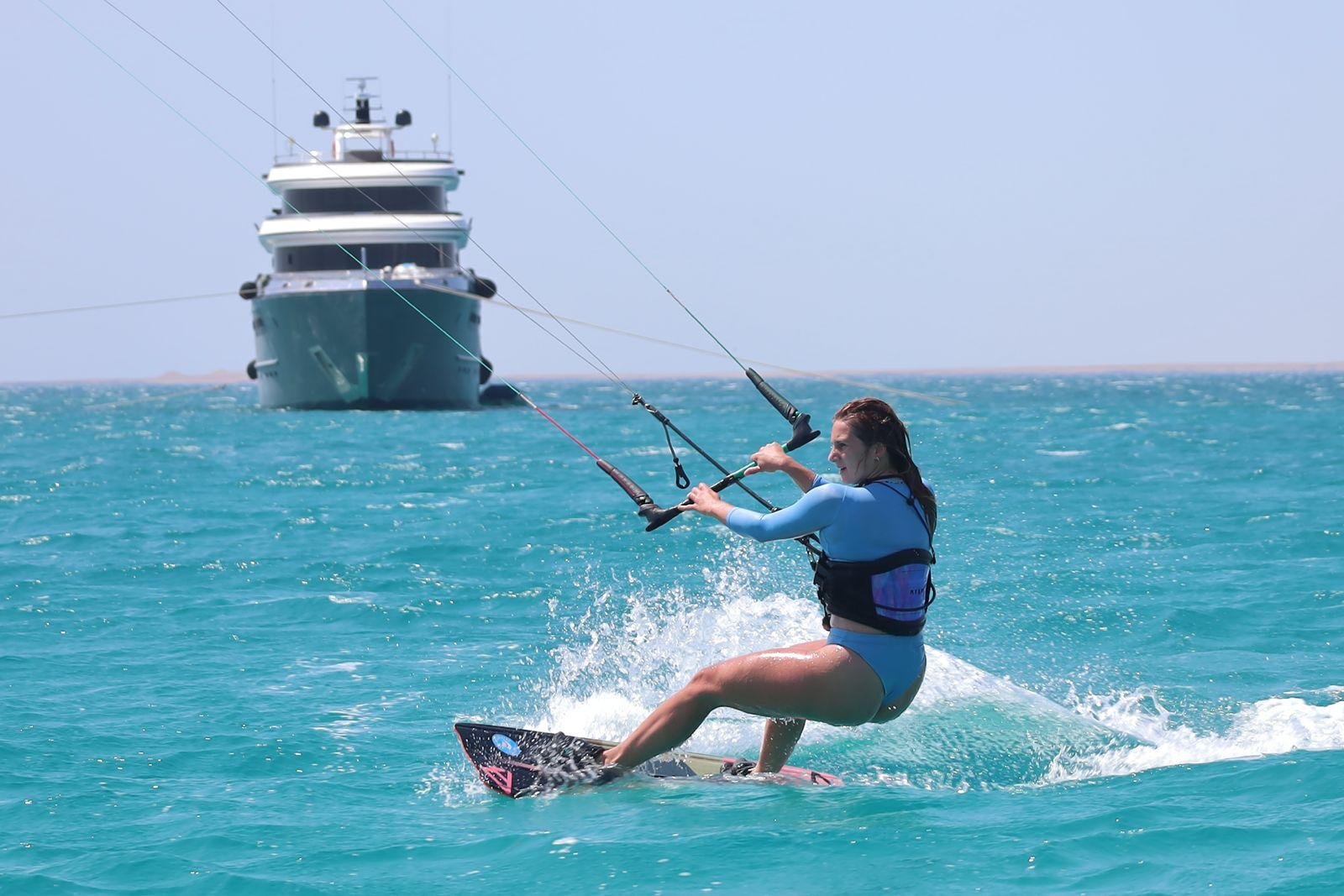
Start the Right Way: Why a Kite Instructor Is Essential
Kitesurfing looks easy when you watch people flying over flat turquoise water. In reality, the firstKitesurfing is not a sport to learn completely on your own. The kite is powerful, the wind can change quickly, and small mistakes can lead to dangerous situations.
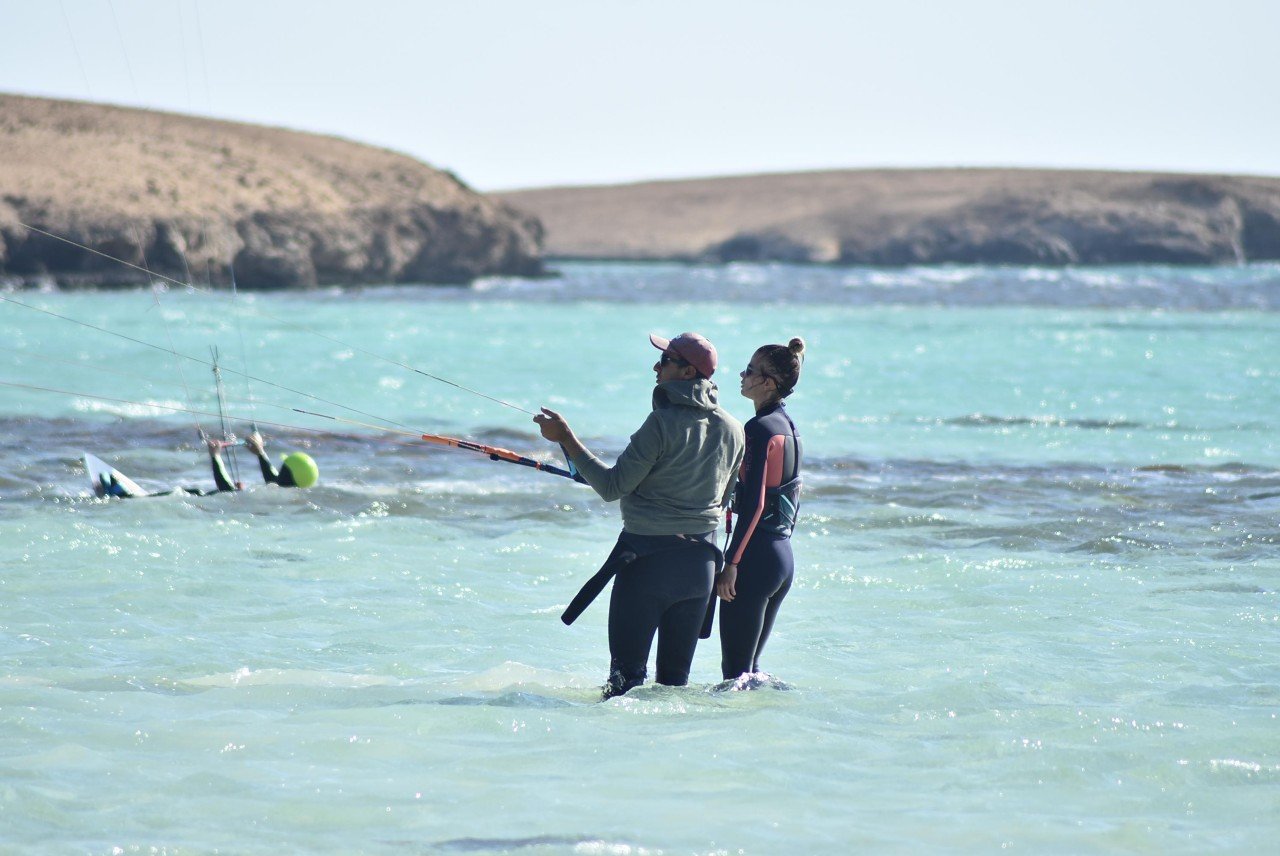
The safest and fastest first step is always to take lessons with a certified kite instructor (IKO, VDWS, etc.).
Instructors will teach you:
- How to choose the right kite size for the wind.
- How your safety systems work and when to use them.
- Where it is safe to launch and land, and which areas you must avoid.
Only when you can control the kite calmly, know how to self-rescue, and feel confident with the basic rules on the water, it makes sense to kitesurf by yourself without supervision.
During Lessons: What to Focus On With Your Instructor
To get the most out of your kite lessons, pay attention to a few key points:
- Ask questions
If you don’t understand something about wind, right of way or equipment, ask. A good instructor will explain until you feel safe. - Master the kite first
Don’t rush to the board. Stable kite control, body-dragging and relaunch in the water are more important than quick first rides. - Watch the wind and the beach
Learn to read the wind direction, look for gusts, and always check what other riders are doing around you. - Practice safety every session
Open and close your quick-release on land, rehearse self-rescue, and build the habit of checking lines and leash before each start. - Listen to feedback
Small corrections in bar position, stance or timing during waterstarts will save you many hours of frustration.
With this attitude you will progress much faster and stay relaxed, even when things feel challenging.acher and spot, those first rides often come much sooner than you expect.
From Lessons to Riding on Your Own
After several hours of lessons you will start riding your first meters on the board and learn to go in both directions. Before you think about kiting completely alone, make sure you can:
- Relaunch the kite from the water without help.
- Body-drag upwind to recover your board.
- Perform a simple self-rescue if something goes wrong.
- Respect right-of-way rules and keep distance from others.
If you build this foundation with a professional instructor, your first independent sessions – and later your first kite safari – will be safer, more fun and full of good memories, not scary moments.od spot and professional lessons – your first steps in kitesurfing will be fun, safe and much faster.